
Our staff care about your child's literacy skills.
We are committed to providing a top quality service in a nurturing environment.
Our teaching program uses a structured, explicit and cumulative approach to literacy instruction, informed by Orton-Gillingham principles.
Students are taught reading and spelling skills systematically, with new learning building carefully on previously taught skills.
Teaching is individualised according to each student’s identified needs and progress.
WHO ARE WE
Caroline
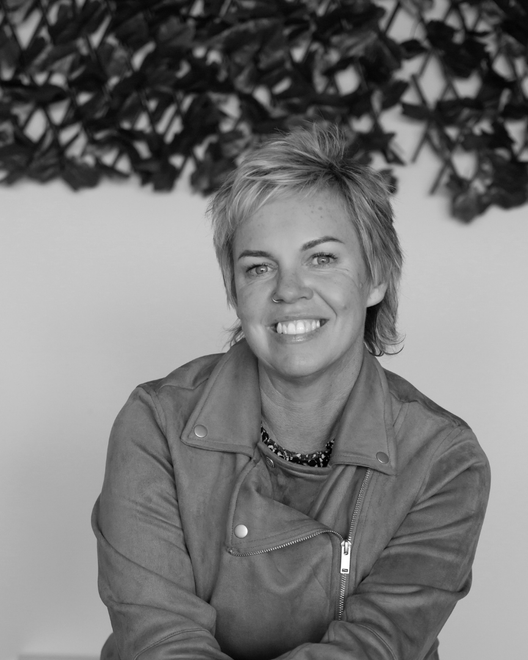
Caroline Denning is the founder and Clinic Director of O-G Reading Clinic. She is a NESA-accredited teacher with more than 20 years’ experience in education, including five years as a Learning Support Teacher.
Caroline holds postgraduate Level 7 qualifications in dyslexia assessment and intervention through Dyslexia Action, along with specialist Orton-Gillingham training in literacy and multisensory maths. She developed the clinic’s structured literacy program and trains and mentors clinic staff in its delivery.
Lisa
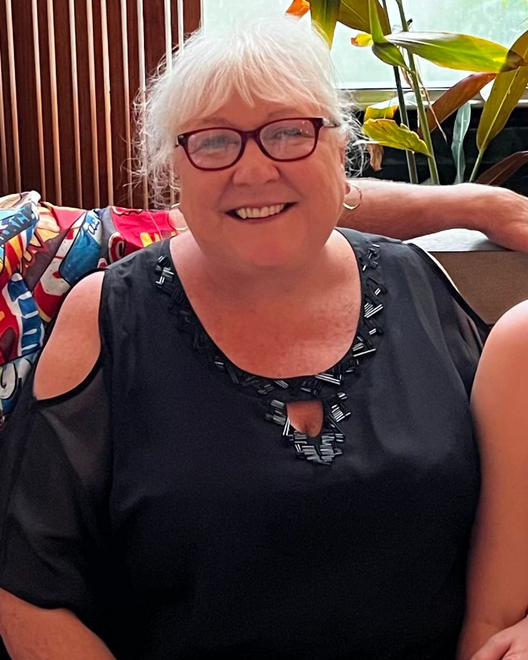
Lisa Dwyer is the Clinic Manager and Senior Literacy Interventionist at O-G Reading Clinic. She brings more than 30 years’ experience in education, including classroom teaching, learning support and 18 years as an Assistant Principal.
Lisa is a highly experienced and skilled teacher with specialist training in structured literacy, including explicit phonics, phoneme–grapheme mapping, syllable division and morphology. She works closely with students and families and plays a key role in mentoring clinic staff and supporting high-quality delivery of the clinic program.
WHAT IS O-G?
Orton-Gillingham is a structured literacy approach to teaching reading and spelling. It uses explicit, systematic and cumulative instruction to help students understand how spoken and written language work.
At O-G Reading Clinic, these principles underpin our structured literacy program. Teaching is individualised according to each student’s identified needs and progress.
Structured
Lessons follow an organised framework so that skills are taught purposefully and connected to previous learning. Students become familiar with lesson routines while teaching remains responsive to their individual needs.
Sequential and Cumulative
Skills are introduced in a carefully planned sequence, beginning with foundational sound–letter relationships and progressing through increasingly complex spelling patterns, syllable structures and morphology. New learning builds on previously taught concepts, with ongoing review and practice to support accuracy, fluency and retention.
Explicit
Students are directly taught the knowledge and strategies they need for reading and spelling. Concepts are explained, modelled and practised rather than left for students to discover or infer for themselves.
Multisensory
Teaching integrates visual, auditory and kinaesthetic elements to strengthen connections between speech sounds, written letters and spelling patterns. Students see, hear, say, read and write as part of the learning process.
Systematic Phonics
Students are explicitly taught the relationships between speech sounds and the letters that represent them. Instruction progresses from the initial alphabetic code to more complex spelling patterns and increasingly sophisticated word structures.
Morphology
As students progress, instruction extends beyond individual sounds and syllables to meaningful word parts. Students learn about prefixes, suffixes, bases and roots, helping them understand how words are constructed and how meaning and spelling are connected.
WHERE THE NAME COMES FROM
The O-G Reading Clinic is named after Samuel Torrey Orton and Anna Gillingham, whose pioneering work laid the foundation for the Orton-Gillingham approach.
SAMUEL TORREY ORTON (1879 TO 1948)
Samuel Torrey Orton was a neuropsychiatrist and researcher whose work focused on children experiencing significant difficulties learning to read. In the 1920s and 1930s, he studied patterns of reading difficulty and explored how language, speech and reading development were connected.
His work contributed to the development of teaching principles that emphasised explicit, structured and multisensory instruction for students with reading difficulties.
ANNA GILLINGHAM (1878 TO 1963)
Anna Gillingham was an educator and psychologist who worked with Samuel Orton to translate his ideas about reading difficulties into a systematic approach to teaching.
Working with teacher Bessie Stillman, Gillingham developed and published instructional materials that organised the teaching of sounds, letters, syllables and word structures into an explicit and carefully sequenced approach. Their work became the foundation of what is now known as the Orton-Gillingham approach.